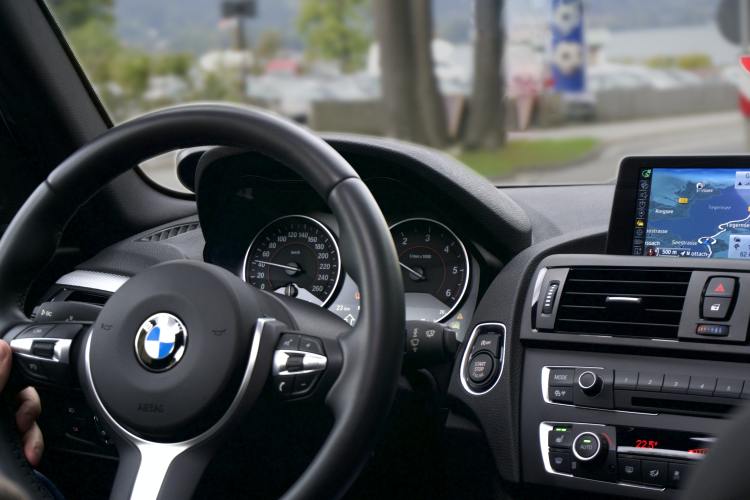
Last week, as I was on a long drive, I was reflecting on how I learned to drive a car with a manual transmission. I remember my dad telling me how easy it was to teach me. Today I can shift up and down without the clutch and skip gears up and down, depending on how much torque I need and the road conditions. This may sound like gibberish or a foreign language to some, but to others it may sound impressive. The question is, “Why was I so easy to teach and why did I learn so quickly?” The answer is — ever since I was tall enough to sit in the front seat, I remember watching my dad drive. I was fascinated with what he was doing with that extra pedal on the left or why he would choose the gears he did. My observations reached a point where I could tell when he skipped a gear while shifting up, because he didn’t need the torque while picking up speed going downhill. I didn’t need to see him do it. I could just feel the car responding.
This reflection made me think about my 15 year old son, Malachi. I will be teaching him to drive very soon. Will he want to drive my car? Is driving stick shift even cool anymore? Will it be difficult to teach him? He doesn’t seem to care what I do. He seems unimpressed. The only reason I learned so quickly, was because I used to watch my dad and studied his moves. My son is more concerned with what is on the radio than how he is getting to his destination.
My son’s lack of concern made me ask myself a question. What am I teaching my son? Or more importantly, which is a completely different question, “What is my son learning from me?” I have realized throughout my life that much of what we learn is subconscious or implicit. Whether it’s how to treat people, how to solve problems, how to fix things, or how to be a man; these are not all lessons we learn by taking notes with a pen and a pad of paper throughout life. So what is my son learning from me?
I remember being impressed with how my dad fixed things; electronics, cars, etc. I am not as mechanically inclined as my father, so I pay people to fix things for me or buy them brand new or fairly new so I know it will be a long time before they break or need maintenance. My son doesn’t see me fix things. As a business consultant specializing in accounting, Malachi sees me staring at a computer screen all day creating reports, manipulating data or talking to clients about their financial data. He doesn’t see me create or fix anything tangible. So again I asked, what am I teaching him, or better yet, what is he learning from me?
When I arrived at home, I asked my wife the same question. ‘Work ethic’ was her response. I am not completely satisfied with this response, but I guess it makes sense. I reflected on a portion of Israel’s book where he discusses the industrial revolution and how it affected the family. Up until the Industrial revolution, men worked at home on the farm where their sons could see them, help them, emulate them, mimic them and learn implicit lessons from their father. Post industrial revolution, men left the home or farm to work in cities or factories where their sons could no longer see them, see what they did or how they did it. The industrial revolution took fathers out of the home or farm for the whole day or weeks at a time. (I’m no historian)
I find that Malachi is often missing when work needs to be done. He is either reading a dystopian novel or watching videos on his computer. As often as I can, I make sure he helps me in whatever I am doing, whether I am cooking, changing my tires, cleaning the garage, or shopping around trying to find the best value. I try to have him just spend time with me to see what I am doing with the hope that he learns something or finds interest in something. Even if he doesn’t find it interesting, one day he will have his own family to cook and shop for, his own tires to change and his own garage to clean. Even as I write this, I realize, maybe my wife was right. Work ethics is one of the most important things he is learning.
There is no instruction manual for our children, but I am reminded of a devotional I read in a book called “Coach Dad.” The writer refers to the bible as the owner’s manual. In 2 Timothy 3:16-17, Paul stresses the importance of God’s word as a manual. “The Scriptures train God’s servants to do all kinds of good deeds. Everything written in the Scriptures is God’s Word. All of it is useful for teaching and helping people, for correcting them and showing them how to live.” It was easy to learn to drive a manual car (stick shift) because I watched my dad for years before I started driving. If much of what we learn is implicit or subconscious, all I can do now is pray that I am living God’s Word and hope that Malachi learns from my life along with our family devotions and prayer.
Andrew

Conversations
Wow that’s awesome I didn’t know he used to drive a taxi but God used him to deliver his message…
Wow that’s was an interesting blog you break it down so timely love it .God loves us no matter what…
Good job with the survey
Great job


 The Genesis Man Project
praise God that’s awesome I myself was a wrestling fan,God is a miracle worker what he did in Shawn Michael’s…