I went to university not only to be a teacher, but to be a band teacher. Music education was the goal of my career -although for the last half of it has been teaching history – but that’s beside the point.
Teaching beginner music was always fun, but young musicians had the potential of a runaway train, or a drunken horse-driven carriage guided by a blind driver…
It has been my experience that no matter how junior the band, be it the
uncontrollably loud saxophones, screeching clarinets, faintish flutes, muddy brass players, a conductor can always make it through a piece if there is a strong percussion player. You can wave your conductor baton as vigorously as you like, but in the end they are more likely to follow what they hear than what they see… (Most of the time they aren’t looking at you anyway, their eyes are glued to the music.)
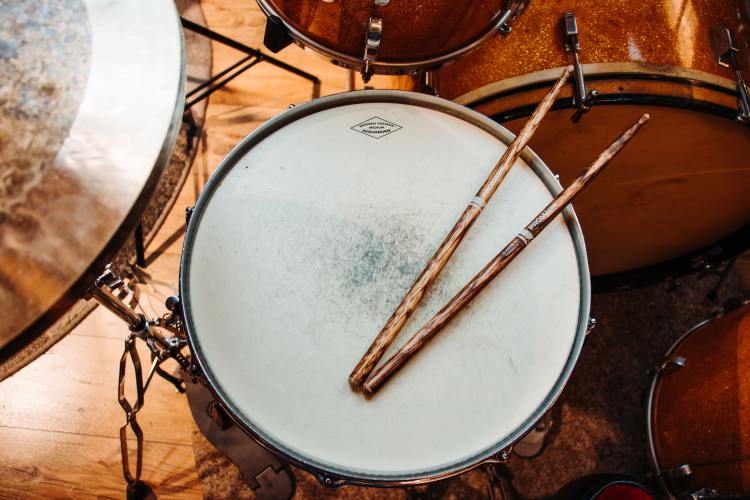
One of the best examples of a strong snare drum can be found when you listen to a famous composition called “Bolero” by Ravel. (I like the version by the Wiener Philharmnonkier conducted by Regente Gustavo Dudmael – check it out HERE). This piece is almost twenty minutes long, and the drummer plays a single 2 measure repeated pattern 169 times.
The YouTube comments laud the skill of the drummer…
“This is seriously one of the most daunting snare parts I’ve ever heard”
“Timeless masterpiece and a wonderful performance. The focus needed for the snare player is superhuman…”
“I hope the drummer and harpist got paid more than the rest. They were non-stop, the others were just sitting around waiting for their bit.”
“The real star of this performance is the drummer. Clap, clap, clap!!!!!!!!!!!!!”
The percussionist has to be a pillar of steadiness as the entire orchestra rest on this one particular rhythmic pattern. Ravel’s repeated singular melodic motif is elaborated over and over and over again and finds it’s rock steady foundation with that snare drum…
I feel like, it’s taking a long time to get to the point, but here it is: The snare drum player in the piece Bolero is a metaphor for the consistency of fatherhood. It starts with fathers to set the tempo (just like in the piece) and be there as each instrument (each person in our sphere of influence) repeats the melody in their own way. It could be the soft violin, or the commanding noble trombone, or a combination of instruments gloriously moving together -regardless, the snare drum is still there whether soft or loud driving the piece to its conclusion…
It was Woody Allen, who famously said: “Half of life is just showing up.” Fathers need to be there in the lives of their families -physically, spiritually and emotionally. They need to be that consistent example. They need to be that voice that is sometimes soft or loud but is always there. They need to maintain the tempo and spiritual example in their families. They may not be beautiful or lyrical. They may be limited in the creative expression of their sound (a snare drum sounds like a snare drum), but that doesn’t matter. They just need to be there.
Are you up for a challenge dad’s? Give up some personal time and spend it with your children.
Have you been absent in the life of a child? Take one step in closing that gap. I think it starts by deciding you want to reach out and then actually doing it.
Not a dad yet? Why not make an investment in a book about fatherhood.
Take your steps and share your stories.


 The Genesis Man Project