Undeniably, there are a lot of problems in our world today. To name the obvious, Covid 19 has caused multiple hardships and difficulties. There are also war, inflation, political and social division, and racial unrest. Then, there are the hot button controversial topics such as Critical Race Theory, and we can’t forget the contentious tight-rope walk between rights and freedoms. It seems like all these cells have come together into a super twister — a perfect storm of issues. It’s not surprising that Ecclesiastes observes that life “under the sun” is filled with adversity, injustice and finally death. (Yes, Solomon could be a bit of a downer…)
While navigating this weather, it feels like men are expected to be emotionally and physically strong. We are to have that stiff upper lip…that sense of stoicism, and are admonished to “man up”. Men are supposed to shoulder the difficulties, and these adversities are supposed to make men stronger, but do they really?
I was reminded not too long ago of the popular, (and) unchallenged notion that you can’t grow if you don’t have challenges. It starts with this idea that adversity builds strength, and the ideas develop from there. For example, adversity is necessary in life because if you don’t have some degree of stress, you can’t push yourself to be better. Finally, who hasn’t heard philosopher Friedrich Nietzsche’s statement, “what doesn’t kill you makes you stronger.” (Let’s not also forget that he also said God was dead…)
But does adversity -often referred to by psychologist as post-traumatic growth- make you stronger?
There is an interesting article I came across called Do we actually grow from adversity? This was based on a study: Fixing the Growth Illusion: New Directions for Research in Resilience and Posttraumatic Growth by Frank J. Infurna and Eranda Jayawickreme.
The popular conclusion is that after adversity, “…people feel a greater appreciation for life, closer to their friends and family, stronger, more spiritual and more inspired.” This a prominent idea that has been strongly embedded in our cultural and social DNA.
As a matter of fact, the article above was one of the very few writings which questioned the notion of the positive outcomes of adversity.
Despite, the large body of data around this assumption, it is not without some red flags -as discussed by Infurna and Jayawickreme. Let’s take a few moments to examine five significant points of their study.
1. Measuring growth requires knowing what you were like before because you need something to compare it to. Naturally, it’s hard to collect data on people before and after a traumatic experience, because how do you know who will experience tragedy?
2. Asking people to estimate how much they have grown before and after is problematic because humans are not good at remembering accurately what they were like before an event. According to researchers, often their feelings don’t match what family and friends say when they reflect on that person’s (the one who took the survey) behaviour. Also, recollection is a very tricky thing because sometimes the act of remembering changes what you originally committed to memory.
3. Another thing to take into consideration is that individuals may say they have grown when they are still struggling. “Telling others that you’ve grown might actually be a way to cope with the pain you’re still experiencing.” Why? “Western culture permits little time to grieve; eventually, the expectation is that people are supposed to ‘get over it and move on’.”
4. Along the same lines, “How much people believe they have changed often isn’t associated with how much they’ve actually changed.” What we want to believe may not measure up with objective reality.
5. Finally, researchers who have been asking questions about personal growth after adversity tend to only inquire about positive change. This can set the scene for bias. (The questions that are not asked (often times) are the ones that dramatically influence the understanding of the discourse. )
When I reflect on this topic, a few thoughts come to mind. If adversity indeed makes one stronger… well…I can think of a few groups with long lasting social scars and impediments. African Canadians and Americans have endured a history and legacy of slavery and discrimination. There remains much social and psychological healing needed.
Indigenous peoples still suffer from the negative effects of colonialism, assimilation and residential schools. It is a statistical truth that they have higher rates of mental disorders, suicide, and stress related illness such as diabetes.
Also, what about those with mental illness that cannot be resolved, but must be managed throughout their lives? Furthermore, not all adversity ends well. I think of people like my sister Yvonne, who lost her fight with cancer, or my father Fred Harriott who passed away in 2021 due to stroke.
Nevertheless, men have their own chapters of ongoing struggles. There are behaviours that we are not proud of, and temptations that we face repeatedly with varying degrees of success.
As Christians we hear the messages warning that if we are not being challenged, we are living too comfortably and that we cannot grow. “For every level, there is another devil.” Right?
If that’s the case, should we pray for adversity and problems so that we can be stronger? (That’s just crazy talk.)
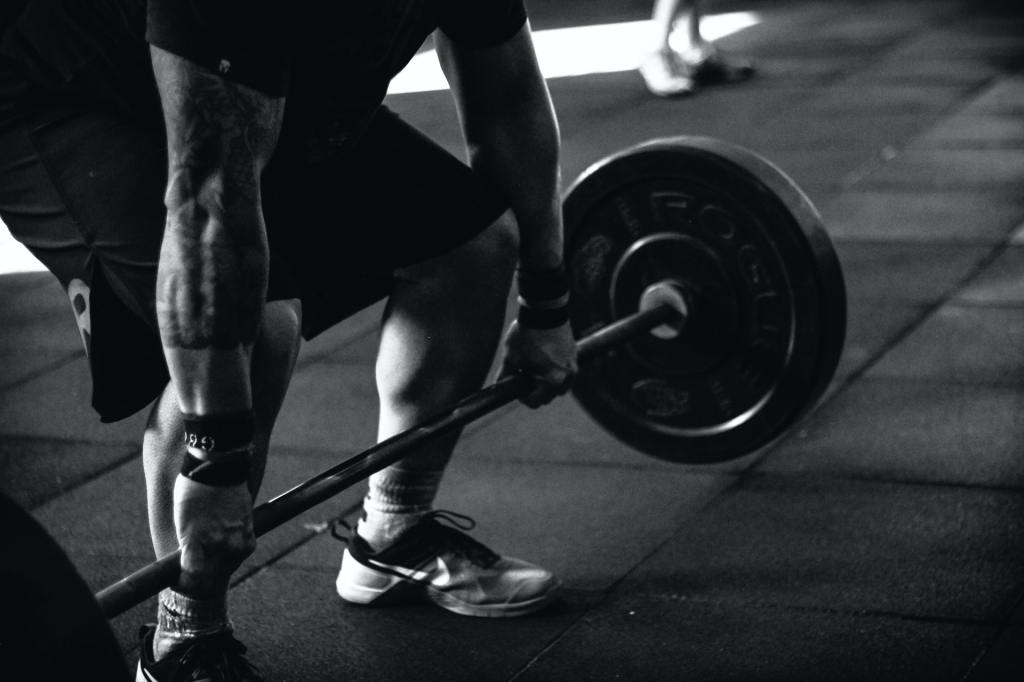
Don’t misunderstand what I’m saying, adversities can make us stronger, but are they the only path to strength? If we liken ourselves to muscles being torn to then made bigger and stronger, well…the problem with that analogy is that we aren’t muscles, we are people. (Moreover, to maintain muscular strength, you must never stop working out, because when you do it turns into fat.)
So, can adversity make you stronger? Yes. You may develop resiliency and strength. However, the problem with embracing this exclusively is explained by the author:
1. If suffering is good in the long run, people who have experienced it are presumed stronger than people who have not.
2. Some effects of tragedy never fully go away.
3. Those struggling months or years after may be considered weak because they haven’t been made stronger.
His takeaway is that individuals can indeed be made stronger, but it probably doesn’t happen as often as most people believe. Availability of resources play a big role in determining whether people do, in fact, grow. Furthermore, the author’s opinion is that growth should not be thought of as the goal for everyone. Adversity may lead to wisdom and new insight, but the “when” and “how” it happens still isn’t clear.
I would like to add one more piece of insight… The thing that can really make us stronger is not how we make it through our adversities but that during our adversity we rely on, embrace, and absorb God’s strength.
“Surely God is my salvation; I will trust and not be afraid. The Lord, is my strength and my song; he has become my salvation.”
Isaiah 12:2
Lead Me is a musical piece by Sanctus Real which has often been my guiding star. It’s an encouragement when I consider my own strength as a husband and a father. In the song, this man reflects on the strength needed to provide leadership, as his family looks to him for support. It is such a huge responsibility. During a moment of vulnerable realization, he is overwhelmed with the task at hand and in the bridge of the song turns to God and asks Him to lead him with strong hands, so that he would be able to lead his family. (It’s worth listening to experience the full impact.)
Men, while you’re going through adversity, seek support and counselling for this is good and sure path towards growth and strength. Also, don’t forget to allow God to lead you, and embrace His strength.
Call to Action
What do you think? Can you remember a time that you’ve grown through adversity? Have some adversity left you struggling? Where have you found support and counselling?
We would love to her your thoughts and your stories. By sharing your resources you could help another. Feel free to email us and leave a comment.


Order the Genesis Man Book – Read Chapter 1

 The Genesis Man Project